



The Sweet Science Resistance: Why Dana White’s UFC Blueprint Has Stalled in Boxing
Dana White Zuffa Boxing: For over two decades, Dana White has stood as the undisputed architect of modern combat sports, transforming the Ultimate Fighting Championship (UFC) from a banned, nearly bankrupt curiosity into a multibillion-dollar global sports empire. The engine behind this unprecedented success was a rigid, highly centralized business model: a single ecosystem where the promotion controls the rankings, owns the championships, and holds absolute leverage over its athletes.
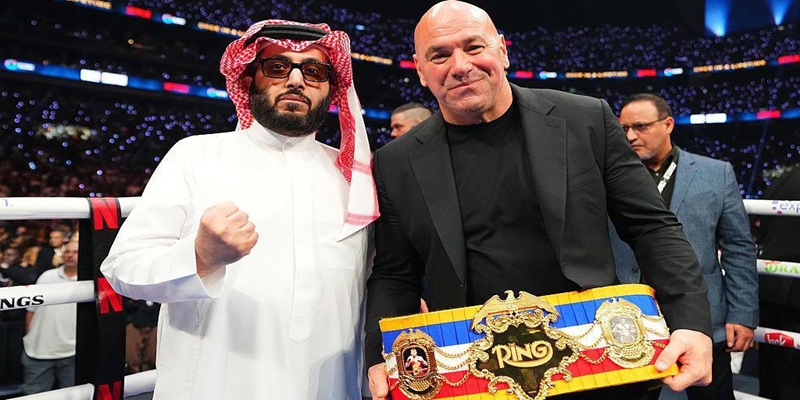
Eager to replicate this golden formula in the boxing world, White—backed by the immense capital of TKO Group Holdings and Saudi Arabia’s General Entertainment Authority—officially launched Zuffa Boxing. Promising to “fix” what he routinely called a broken and dying sport, White’s ambition was to establish a league-style format with regular fight cards, exclusive rosters, and a single recognizable brand.

- Betfred Boxing
- Competitive Odds
- Boxing Specials
- Special Offers
Betfred: New customers only. Register, deposit with Debit Card, and place first bet £10+ at Evens (2.0)+ on Sports within 7 days to get 3 x £10 in Sports Free Bets & 2 x £10 in Acca Free Bets within 10 hours of settlement. 7-day expiry. Eligibility & payment exclusions apply. Full T&Cs apply. BeGambleAware.
Yet, months after its grand rollout and a high-profile media distribution deal on Paramount+, the revolutionary “UFC format” has stubbornly failed to materialize in the boxing ring. Instead of staging a hostile takeover, Zuffa Boxing has been forced into the very compromises White spent years deriding: co-promoting with established rivals, bending to the financial demands of superstar athletes, and navigating a complex legal landscape designed precisely to prevent monopolies.
Replicating the UFC model in the world of boxing has proven to be exponentially more difficult than TKO anticipated. A combination of deep-rooted systemic barriers, entrenched power dynamics, and strict federal legislation has stubbornly halted the corporate centralization of the sweet science.
Dana White Zuffa Boxing
UFC / MMA Model
- Market Structure: Monopsony; single promoter controls belts and rankings.
- Regulatory Framework: State athletic commissions only; no overarching federal firewall.
- Promoter-Manager Roles: Blurred; the promotion frequently acts as both coordinator and gatekeeper.
- Athlete Leverage: Low to moderate; exclusive long-term contracts limit open market bidding.
Traditional Boxing Model
- Market Structure: Decentralized; multiple promoters, four major sanctioning bodies.
- Regulatory Framework: Bound by the federal Muhammad Ali Boxing Reform Act.
- Promoter-Manager Roles: Strict legal separation between promoter and manager roles.
- Athlete Leverage: High for elite stars; independent free agency allows broad bidding wars.
The Legal Fortress: The Muhammad Ali Act and Corporate Roadblocks
The single greatest obstacle to Zuffa Boxing’s centralized dream is a formidable piece of federal law: the Muhammad Ali Boxing Reform Act. Enacted by the U.S. Congress in 2000, the Ali Act was specifically designed to protect boxers from the highly exploitative, monopolistic practices that historically plagued the sport. Crucially, the legislation mandates a strict legal firewall between boxing promoters and managers. Under the Act, a promoter cannot act as a fighter’s manager, nor can they exert coercive control over a boxer’s career by forcing them into long-term, restrictive promotional options just to get a title shot.
This legal framework directly contradicts the bedrock of the UFC’s business model. In mixed martial arts, the UFC effectively functions as promoter, manager, sanctioning body, and broadcaster all at once—a structure that allows them to dictate exactly who fights whom, when, and for how much money. Because the Ali Act does not cover MMA, White has been free to run a closed ecosystem. In boxing, however, attempting to enforce unilateral opponent designations, exclusive worldwide fighter rights, and mandatory class-action waivers instantly triggers federal legal violations.
To bypass this hurdle, TKO has actively lobbied Congress to amend the law, pushing for the introduction of Unified Boxing Organizations (UBOs). This proposed loophole would allow Zuffa Boxing to create its own internal ranking systems and exclusive championship belts, effectively stripping away the athlete protections guaranteed by the Ali Act. Critics and legal watchdogs have blasted these efforts as dystopian, pointing out that TKO is attempting to rewrite federal law purely to reduce fighter leverage and centralize corporate power. As long as the Ali Act remains intact in its current form, the ironclad control that defines the UFC format cannot legally exist in American boxing.
The War of the Promoters: Entrenched Power and Fierce Opposition
Even if Zuffa Boxing manages to navigate the legal minefield, it faces furious resistance from an entrenched cartel of boxing promoters who have no intention of surrendering their territory. Unlike MMA, where the UFC bought out or crushed its early competitors like PRIDE and Strikeforce, boxing is fiercely tribal and deeply decentralized. Power players like Matchroom Boxing’s Eddie Hearn, Queensberry Promotions’ Frank Warren, and Top Rank’s Bob Arum possess decades of institutional knowledge, deep television partnerships, and fiercely guarded athlete allegiances.
When Zuffa Boxing attempted to assert its dominance, it triggered an immediate heavyweight war behind the scenes. A glaring example occurred during the planning of the massive Tyson Fury vs. Anthony Joshua bout. When initial announcements positioned White and Zuffa as the lead co-promoters via their relationship with Netflix, Eddie Hearn immediately pushed back. Hearn publicly clarified that Joshua’s binding promotional contracts legally barred White and TKO from exercising any promotional authority over the bout.
Rather than standardizing the sport under one banner, White’s entry has simply added another cook to an already crowded kitchen. Veteran promoters view Zuffa’s “visionary” approach not as innovation, but as a hostile corporate land grab. They have successfully used their existing contracts and legal leverage to block Zuffa from taking solo credit or command over major events, forcing TKO to compromise and share the marquee.

Shifting Economics and the Realities of Fighter Leverage
The financial reality of elite boxing has dealt perhaps the most humbling blow to the Zuffa blueprint. The UFC model relies entirely on the premise that the “brand is the star.” Because the UFC controls the belts, fans tune in for the three letters on the canvas, allowing the promotion to keep athlete wage payout at a fraction of total revenues.
Boxing operates on the exact opposite economic paradigm: the fighter is the brand. Elite boxers are independent contractors who understand their market value. They are accustomed to pulling in massive percentages of the gate and pay-per-view revenue, occasionally pocketing tens of millions for a single evening’s work. When Zuffa Boxing signed star welterweight Conor Benn, the structural friction became instantly apparent. Benn’s blockbuster bout against Ryan Garcia had to be co-promoted alongside Golden Boy Promotions, meaning Zuffa could not dictate the terms, control the broadcast exclusively, or run the event like a standard UFC card.
Furthermore, the sheer economic disparity between boxing’s top tier and its undercards has disrupted Zuffa’s league-style ambitions. While a superstar can command an astronomical payday, Zuffa’s developmental undercard fighters are reportedly earning drastically lower sums, mirroring the highly criticized pay structure of the UFC’s preliminary cards. Trying to build a sustainable, standardized league while balancing the massive purse expectations of boxing’s elite free agents has proven to be an algorithmic nightmare for TKO, forcing an undeniable shift in their original business model.
A Fragmented Future
Ultimately, Dana White and TKO underestimated the sheer resilience of boxing’s ancient, chaotic structure. The very elements that make boxing infuriating to casual fans—the alphabet soup of sanctioning bodies, the web of competing networks, and the hyper-independence of its stars—are the exact mechanisms that protect it from a corporate monopoly.
Zuffa Boxing set out to break the old guard and implement a clean, uniform league system. Instead, the realities of the Muhammad Ali Act, relentless opposition from rival promoters, and the uncompromising financial demands of the fighters have forced White to adapt to boxing, rather than forcing boxing to adapt to him. The UFC blueprint, for all its unparalleled success in the cage, has found the boxing ring to be a far less hospitable environment.
Dana White Zuffa Boxing

- Betfred Boxing
- Competitive Odds
- Boxing Specials
- Special Offers
Betfred: New customers only. Register, deposit with Debit Card, and place first bet £10+ at Evens (2.0)+ on Sports within 7 days to get 3 x £10 in Sports Free Bets & 2 x £10 in Acca Free Bets within 10 hours of settlement. 7-day expiry. Eligibility & payment exclusions apply. Full T&Cs apply. BeGambleAware.