

The Great Disruption: How Streaming Giants are Dismantling Pay-Per-View
For decades, the business of boxing was built on a simple, lucrative formula: premium fights belonged on pay-per-view. From the golden era of HBO to the blockbuster nights headlined by stars like Mike Tyson and Floyd Mayweather, fans were conditioned to pay $50, $70, or even $100 for a single night of action.
But that model—once the financial backbone of the sport—is now under sustained pressure. A new generation of broadcasters, led by streaming platforms and global tech giants, is rapidly reshaping how boxing is distributed, consumed, and monetized. The result is a fundamental transformation of the sport’s media ecosystem—one that could signal the eventual decline of pay-per-view altogether.
The End of the Old Guard
The shift did not happen overnight. It began with the gradual collapse of boxing’s traditional television strongholds.
The most symbolic moment came when HBO exited boxing in 2018 after more than four decades in the sport. The decision reflected declining ratings, rising competition from digital platforms, and increasing difficulty in securing top-tier fights .
This departure marked the end of an era. Boxing, once a staple of premium cable, suddenly found itself searching for a new home.
The Rise of Streaming: DAZN Leads the Charge
Into that vacuum stepped DAZN, a subscription-based platform that positioned itself as the “Netflix of sports.”
DAZN’s strategy was aggressive and disruptive:
- Sign exclusive deals with major promoters
- Offer a consistent schedule of fights
- Replace one-off PPV purchases with a monthly subscription
By 2026, DAZN has become arguably the central hub for boxing, securing long-term partnerships with leading promoters such as Matchroom Boxing and Golden Boy Promotions . It now broadcasts over 180 fight nights annually, creating a volume-driven model designed to keep fans engaged year-round .
Yet DAZN’s approach has not been entirely straightforward. While initially positioning itself as anti-PPV, the platform has experimented with hybrid models—including subscription tiers that bundle pay-per-view events into a single package .
This reflects a broader industry tension: how to transition away from PPV without sacrificing the enormous revenue it can generate for mega-fights.
Netflix Enters the Ring
If DAZN represented the first wave of disruption, the arrival of Netflix marks a potentially seismic second phase.
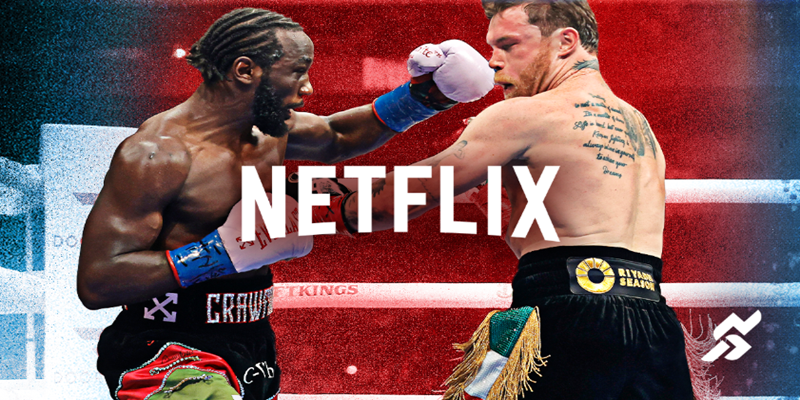
In 2025, Netflix made headlines by streaming a major superfight between Canelo Álvarez and Terence Crawford to its global subscriber base. The move followed the platform’s earlier success with crossover events, including the hugely watched Jake Paul vs. Mike Tyson bout, which reportedly drew tens of millions of viewers worldwide .
Unlike traditional PPV, Netflix’s model does not rely on per-event purchases. Instead, it leverages:
- A massive global subscriber base
- Predictable recurring revenue
- Data-driven content strategy
For boxing, this is transformative. Instead of asking fans to repeatedly pay premium prices, fights can be integrated into an existing subscription—dramatically lowering the barrier to entry and expanding the audience.
Industry analysts increasingly view this as a turning point. If the biggest fights can generate more value through subscriptions and global reach than through PPV buys, the economic logic of the sport begins to change.
Saudi Influence and the Push Away from PPV
Another major force accelerating this shift is Turki Alalshikh and the Saudi-backed boxing ecosystem.
Through partnerships with DAZN, Alalshikh has openly criticized the pay-per-view model, arguing that it restricts fan access and limits the sport’s growth. In a landmark move, events tied to Riyadh Season have begun eliminating standalone PPV fees entirely, instead including major fights within standard subscription packages .
This is a radical departure from tradition. For decades, the biggest fights were gated behind the highest prices. Now, some of the sport’s most significant events are being positioned as broadly accessible content.
The implication is clear: boxing may be shifting from a transactional model (pay per fight) to a platform model (pay for access).
New Players, New Platforms
The transformation extends beyond DAZN and Netflix. Other major media players are entering the space with their own strategies.
For example:
- Paramount+ has secured rights to stream Zuffa Boxing events in the United States, signaling further convergence between boxing and mainstream streaming ecosystems .
- Traditional promoters are increasingly aligning with digital platforms rather than linear broadcasters.
- Tech-driven distribution—ranging from mobile streaming to global OTT services—is becoming the norm.
Even within DAZN’s ecosystem, innovation continues, with new distribution concepts aimed at making live sports accessible anywhere, including while traveling .
The Decline—But Not Death—of Pay-Per-View
Despite these shifts, it would be premature to declare PPV dead.
The model still offers:
- Massive upside for superfights
- Clear revenue splits for fighters and promoters
- Proven success in high-demand scenarios
However, its dominance is clearly eroding.
Streaming offers several advantages:
- Scalability: Millions of viewers without incremental cost
- Predictability: Subscription revenue vs. volatile PPV buys
- Accessibility: Lower barriers for casual fans
As one industry trend suggests, the future may not be a complete elimination of PPV, but rather its absorption into broader subscription ecosystems—where it becomes just one component of a larger offering.
A Sport at a Crossroads
Boxing now finds itself at a pivotal moment.
On one side is its traditional business model:
- Fragmented promoters
- Event-based revenue
- High-priced PPV
On the other is an emerging digital ecosystem:
- Global streaming platforms
- Subscription-driven economics
- Data-led audience growth
The entry of companies like Netflix—and the aggressive expansion of DAZN—suggest that boxing is no longer just competing within combat sports. It is competing within the broader entertainment economy.
Final Thoughts…
The broadcasting landscape in boxing is undergoing its most significant transformation in decades. What began with the decline of cable television has evolved into a full-scale shift toward streaming, subscriptions, and global distribution.
Pay-per-view, once untouchable, is now being challenged from multiple directions—by technology, by new financial models, and by powerful stakeholders willing to rethink the sport’s fundamentals.
Whether PPV disappears entirely or survives in a reduced role, one thing is clear: boxing is no longer just selling fights.
It is selling access, attention, and global reach—and the companies best positioned to deliver those at scale are rapidly taking control of the sport’s future.