

The Fall of the King: How Don King Lost His Grip on Boxing
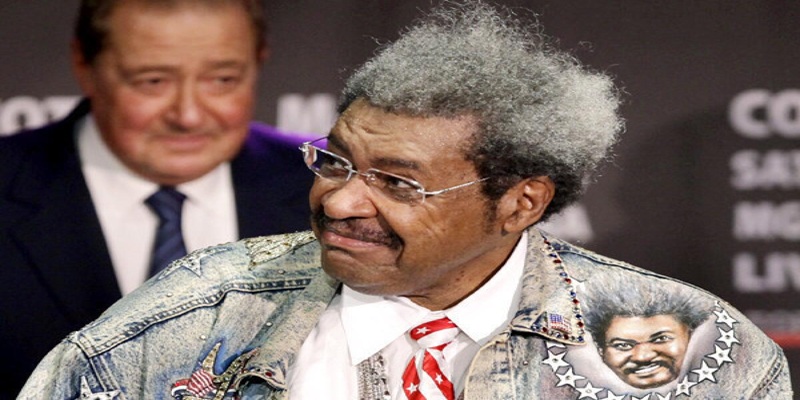
For decades, Don King was not just a boxing promoter—he was the promoter. With his electrifying personality, towering hair, and unmatched flair for spectacle, King helped define boxing’s most lucrative and iconic era. He stood at the center of the sport during its peak in the 1970s, 80s, and 90s, orchestrating mega-events that captured global attention and generated enormous revenue.
At his height, King wielded a level of control that bordered on monopoly. He promoted many of the biggest stars, controlled championship opportunities, and maintained deep relationships with sanctioning bodies and broadcasters. Yet by the 2000s, his dominance had eroded dramatically. The man who once ruled boxing found himself increasingly sidelined, his influence diminished in a sport he had shaped.
The story of Don King’s decline is not the result of a single event, but a convergence of structural changes, industry evolution, and personal controversy.
Building an Empire
Don King’s rise was rooted in his ability to turn boxing into spectacle. He promoted legendary events such as the Rumble in the Jungle and the Thrilla in Manila, fights that transcended sport and became cultural landmarks.
Working with icons like Muhammad Ali, Mike Tyson, and Evander Holyfield, King built a roster that gave him enormous leverage. If you wanted to stage the biggest fights, you often had to go through him.
His business model was aggressive and highly centralized. Fighters were tied into long-term promotional agreements, and King often worked closely with sanctioning bodies such as the World Boxing Council and the World Boxing Association, ensuring his fighters had access to titles—and therefore marketability.
For a time, it worked flawlessly. King was boxing’s ultimate power broker.
Cracks in the Foundation
Despite his success, King’s empire was built on fragile ground.
Throughout his career, he faced repeated accusations from fighters who claimed they had been underpaid or misled. High-profile legal disputes—particularly with Mike Tyson—brought these issues into public view. Tyson ultimately sued King for $100 million, settling for a reported $14 million.
These controversies began to damage King’s reputation within the industry. Fighters became more cautious, managers more protective, and rival promoters more aggressive in positioning themselves as alternatives.
Trust, once lost, proved difficult to regain.
The Rise of New Power Centers
As King’s influence began to wane, new promoters emerged to challenge his dominance.
Companies like Top Rank, led by Bob Arum, and later Golden Boy Promotions, founded by Oscar De La Hoya, began to sign top talent and secure major broadcast deals.
Unlike King’s centralized approach, these promoters operated in a more fragmented ecosystem, competing for fighters and television slots. This competition diluted King’s control. No longer could one promoter dictate the terms of the entire sport.
At the same time, powerful advisers like Al Haymon began to reshape the business from another angle—managing fighters independently of promoters and creating new alliances with broadcasters.

The Television Shift
One of the most significant factors in King’s decline was the transformation of boxing’s broadcast landscape.
During his peak, King thrived in an era dominated by a few key networks, particularly HBO and Showtime. His ability to deliver stars made him indispensable to these broadcasters.
But as the industry evolved, networks began to diversify their relationships. Instead of relying heavily on one promoter, they spread their investments across multiple entities.
This shift reduced King’s leverage. Without exclusive control over top fighters or guaranteed access to major broadcast platforms, his negotiating power weakened.
Aging Stars and a Thinning Roster
Another critical issue was King’s reliance on established stars rather than consistently developing new ones.
As fighters like Tyson and Holyfield aged out of their primes, King struggled to replace them with the next generation of superstars. Meanwhile, rival promoters invested heavily in younger talent, building future headliners and securing long-term promotional rights.
In boxing, star power is everything. Without it, even the most experienced promoter cannot command the same influence.
Legal and Structural Changes
The introduction of the Muhammad Ali Boxing Reform Act in 2000 also altered the promotional landscape.
Designed to protect fighters from exploitation, the law imposed greater transparency and limited certain business practices that had previously been common. While it did not target King specifically, it curtailed aspects of the system that had enabled promoters to exert extensive control over fighters’ careers.
This made it harder for any single promoter to replicate the level of dominance King once enjoyed.
A Changing Sport
By the 2000s and 2010s, boxing had become fundamentally more fragmented. Multiple promoters, networks, and sanctioning bodies all competed for influence.
The era of a single dominant figure was effectively over.
King, once the center of gravity in boxing, became increasingly peripheral. He continued to promote events, but they lacked the scale and significance of his earlier work. The sport had moved on—more competitive, more complex, and less susceptible to centralized control.
Legacy: A Giant of Another Era
Despite his decline, Don King’s impact on boxing is undeniable.
He helped transform the sport into a global spectacle, pioneering the promotion of mega-events that generated unprecedented revenue and attention. His shows were not just fights—they were cultural moments.
At the same time, his career serves as a cautionary tale. The very tactics that fueled his rise—tight control, aggressive contracts, and relentless self-interest—also contributed to his fall, as fighters and the industry pushed back.
Final Thoughts…
The decline of Don King reflects a broader truth about boxing: power in the sport is rarely permanent.
What was once a near-monopoly gave way to a decentralized, competitive landscape shaped by multiple promoters, broadcasters, and power brokers. Structural changes, legal reforms, and shifting business models ensured that no single figure could dominate in the same way again.
Don King did not simply lose control of boxing—the sport evolved beyond the conditions that made his dominance possible.
And in that sense, his fall was not just personal. It marked the end of an era.